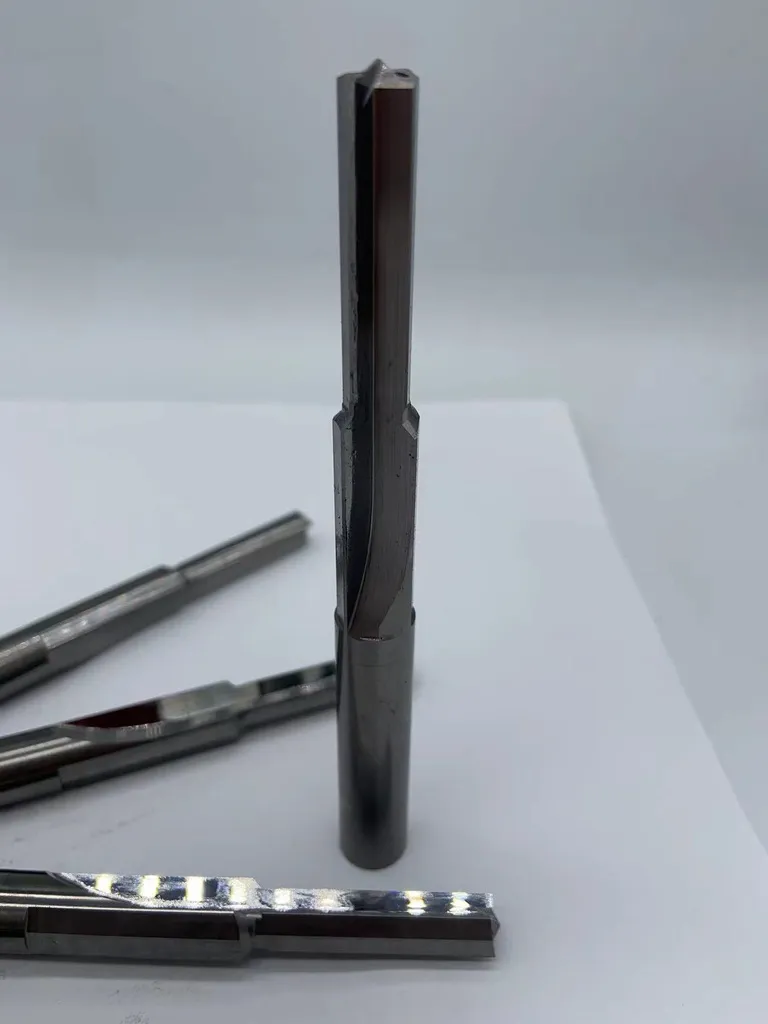
Custom step drill bits combine drilling and sizing in one tool to reduce tool changes and improve coaxiality. This guide covers step geometry, tolerance planning, and what to include in your RFQ.
Custom step drill bits (custom step drills) are purpose-built to create two or more diameters in one setup. They reduce repositioning, help keep steps concentric, and can eliminate secondary boring for many production holes—if the geometry and process parameters are specified correctly.
When Custom Step Drills Make Sense
- Parts with countersinks/counterbores or stepped bores that must stay coaxial.
- High-mix production where cycle time is dominated by tool changes and probing.
- Deep steps where a second tool would chatter or leave mismatch at the shoulder.
What to Specify (Avoid Quote Delays)
- Each step diameter + step length, plus overall flute length and OAL.
- Point style (standard, split point, three-point/flat-bottom if required).
- Material, hardness, and whether the hole is through or blind.
- Tolerance by step (e.g. H7 on one diameter) and surface finish target.
- Coolant (flood vs through-coolant), and available pressure if through-coolant.
Chip Evacuation, Coolant, and Shoulder Quality
Step drills can pack chips at the shoulder transition if flute form and coolant delivery are not aligned to the depth and material. For tough steels and deep steps, through-coolant or optimized flute polish can be the difference between stable drilling and sudden breakage.
Related Products — Carbide Drills
Through-coolant carbide drills for stable chip evacuation in deeper holes.
General-purpose carbide drills for production holes when through-coolant is not required.
Large diameter drilling with replaceable tips and predictable cost per hole.
Browse drill families before specifying a custom stepped geometry.
Related Real Cases
See step drill and deep drilling examples here: https://solidcarbidedirect.com/custom-tooling-cases
Tags