Custom Carbide End Mills: How to Specify Geometry for Performance
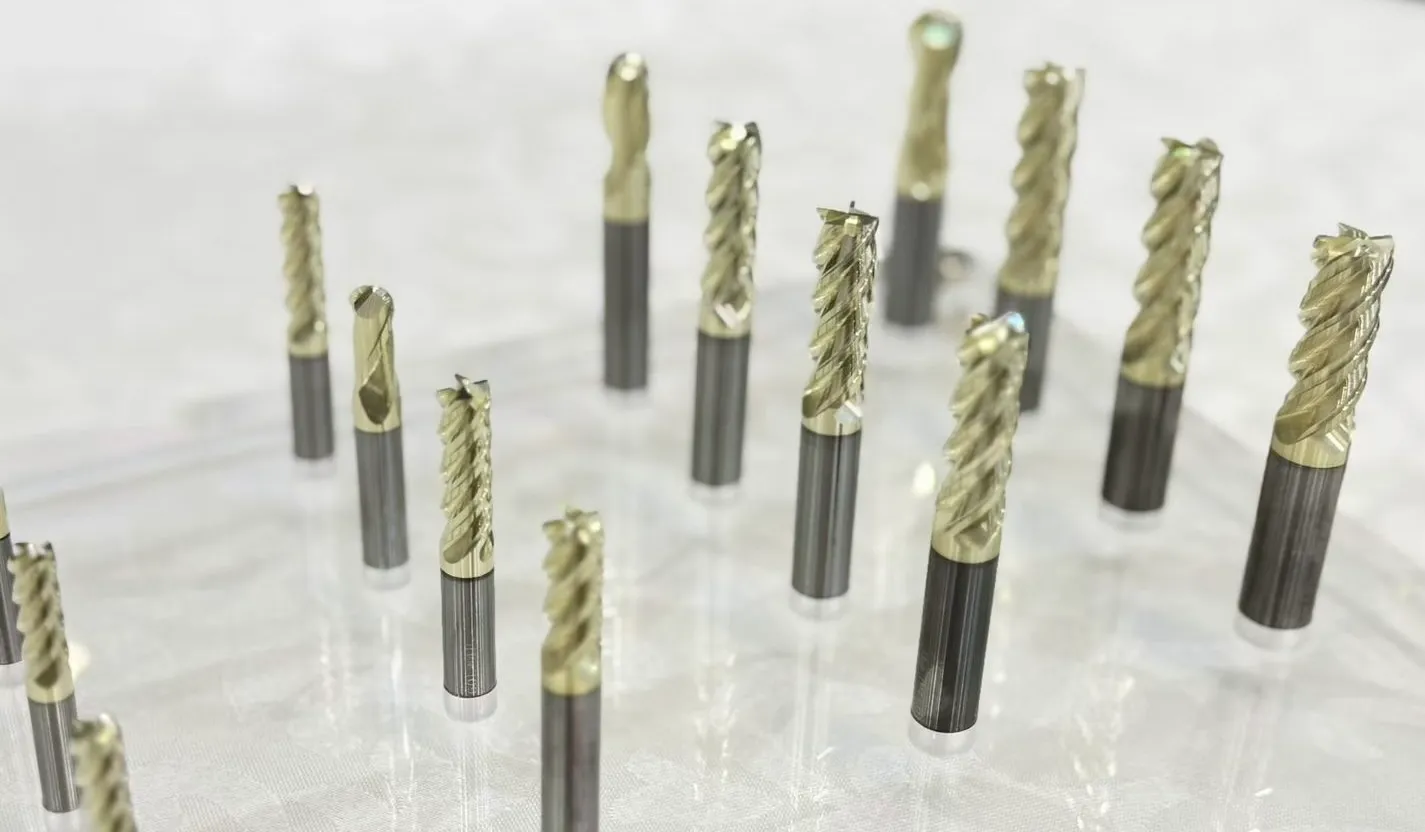
Custom carbide end mills are used when reach, clearance, profile, or material-driven performance cannot be met by standard tools. This guide explains the specs that drive fast quotes and repeatable performance.
Custom carbide end mills can be designed around your cut: slotting vs profiling, roughing vs finishing, and the exact material you run. To avoid delays, treat the RFQ as an engineering input—define the geometry constraints and what matters most: finish, life, or cycle time.
Common Custom End Mill Requests
- Neck relief for clearance and reach.
- Tapered tools for draft walls and access limits.
- Corner radius for stronger edges in steel and stainless.
- Profile/form tools to cut a non-standard section in one pass.
RFQ Checklist
- Diameter, LOC, OAL, shank diameter, and any neck dimensions.
- Number of flutes, helix preference (if known), and corner radius (if any).
- Material and hardness; coolant method; target speeds/feeds (if known).
- Tolerance targets and surface finish requirement.
Related Products — End Mills
Square end mills as a baseline before special reach or profile modifications.
Ball nose tools for 3D contouring and mould finishing.
Corner radius tools for stronger edges and reduced chipping.
Browse end mill families for steels, stainless, titanium, aluminium, and graphite.
Custom Tooling Real Cases
See end mill case photos and special tools: https://solidcarbidedirect.com/custom-tooling-cases
Tagi