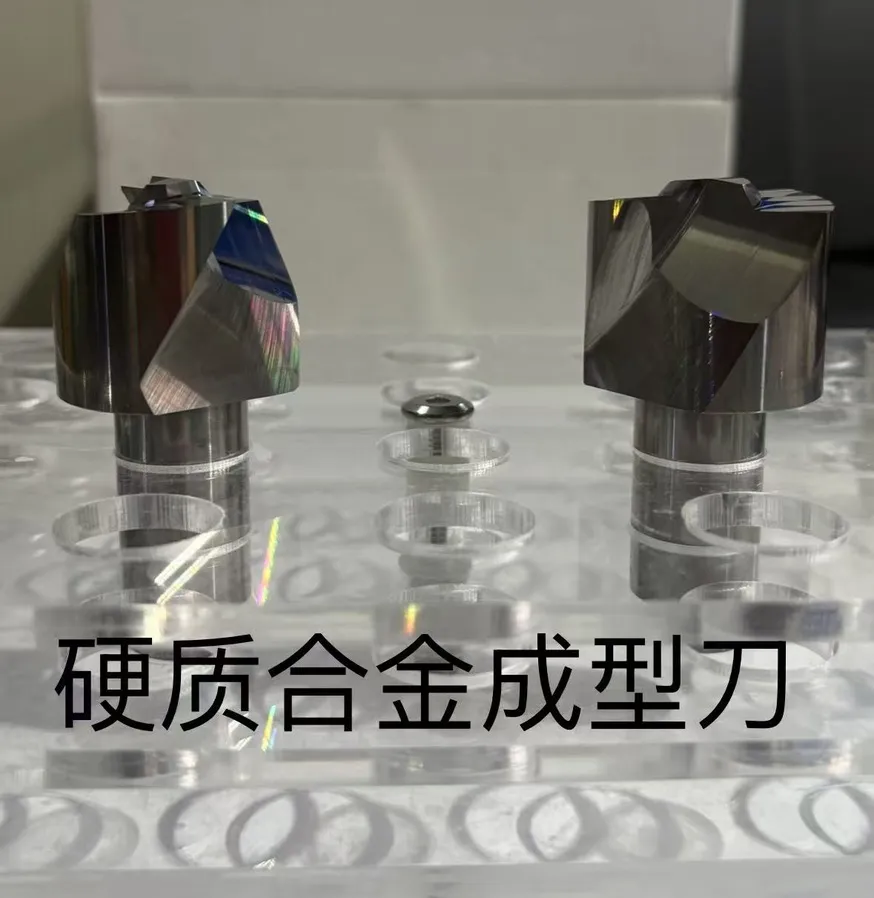
Compare China custom carbide tool suppliers by drawing review, sample acceptance, inspection, revision control and repeat-order support for OEM purchasing.
Custom carbide tool manufacturers in China are easiest to compare when every supplier receives the same controlled drawing and acceptance criteria. A competitive quotation is incomplete if it leaves the cutting profile, inspection scope or repeat-order specification open. This guide compares five supplier routes with published custom or special-tool offerings and provides a practical sequence for drawing review, sampling and repeat purchasing.
China manufacturers and suppliers to compare
| Manufacturer / supplier | Published product route | What to verify |
|---|---|---|
| Solid Carbide Direct / KY Tools | Drawing-based drills, end mills, reamers and form-tool examples | Review the critical profile, inspection points and sample scope. |
| Yongpu Precision | Dedicated non-standard customization route | Confirm design responsibility and the required validation process. |
| AHNO | Catalog notes availability of special tool orders | Verify whether the requested modification fits the supported product family. |
| DOHRE | Non-standard milling and custom service categories | Ask for an application-specific drawing and sample proposal. |
| Leehoo / Changzhou Lihao Tools | Non-standard CNC tool category | Confirm geometry feasibility, inspection and repeat-order conditions. |
Official supplier references
Official navigation includes non-standard customization.
Catalog identifies availability of special tool orders.
Non-standard milling categories and custom service.
Official product navigation includes non-standard CNC tools.
First decide whether a custom tool is necessary
A standard tool may already produce the feature with a different sequence or holder. A custom design becomes worth evaluating when access, a stepped profile, a combined operation or a specified radius creates a measurable production need. State that need clearly: the supplier must know whether the priority is cycle time, tool access, dimensional control or reducing the number of separate operations.
Separate a special size from a new cutting function
| Project type | Buyer input | Required supplier response |
|---|---|---|
| Modified standard tool | Existing code plus changed dimension | Confirmation of geometry, coating and inspection impacts |
| Form or stepped cutter | Dimensioned profile with datums | Manufacturing drawing and measurable profile tolerances |
| Combined operation tool | Part drawing and machining sequence | Feasibility review covering engagement and chip evacuation |
| Replacement for an existing tool | Authorized drawing, sample information and failure history | Explicit differences and a comparable trial proposal |
| Private-label repeat program | Approved tool specification and forecast | Revision, marking, packing and batch traceability agreement |
A sample is useful evidence, but it may be worn or lack the design intent. Do not leave the supplier to infer all critical dimensions from a used tool. Identify the part features that matter and distinguish dimensions to copy from features the supplier may redesign. Record the approved drawing revision before machining the first production batch.
Use a gated purchase process
- Drawing review: settle material, geometry, datums, tolerances, coating and critical inspection points.
- Sample approval: agree quantity, measurement records and a representative machining trial.
- Pilot order: check repeatability across more than the original sample and confirm marking and packing.
- Repeat supply: order against the approved revision and require notification of relevant specification changes.
Ask who owns each decision. The buyer may specify the finished part while the supplier proposes the cutting geometry; both parties still need to approve the final tool drawing. If the tool uses internal coolant, include the available supply and outlet requirements in the review. If a special coating is requested, confirm the process and any implications for final dimensions.
Read quotations as technical documents
Compare what is included: design work, samples, inspection, marking, packing and delivery terms. Ask how the supplier handles a sample that meets the tool drawing but does not achieve the intended part result. This should lead to an agreed application review and test scope, rather than an undefined promise of performance.
For repeat orders, retain the approved drawing, trial report, tool code and relevant photographs. Define how revisions are identified and how a proposed change is communicated. A lower repeat price is not a sound trade if the quoted geometry or inspection scope has silently changed. Request the commercial terms separately from the technical acceptance criteria so that each remains clear.
When KY Tools is a suitable factory to approach
The Solid Carbide Direct case library shows custom drills, end mills, reamers and form tools. Use the closest example to explain your requirement, then provide the actual drawing and work material. The factory review should establish whether the requested design is feasible and what must be confirmed in a sample before committing to repeat production.
Products and related buying guides
Related supplier comparisons
Compare suppliers and prepare an application-specific enquiry.
Compare suppliers and prepare an application-specific enquiry.
Compare suppliers and prepare an application-specific enquiry.
Compare suppliers and prepare an application-specific enquiry.
Compare suppliers and prepare an application-specific enquiry.
Tags