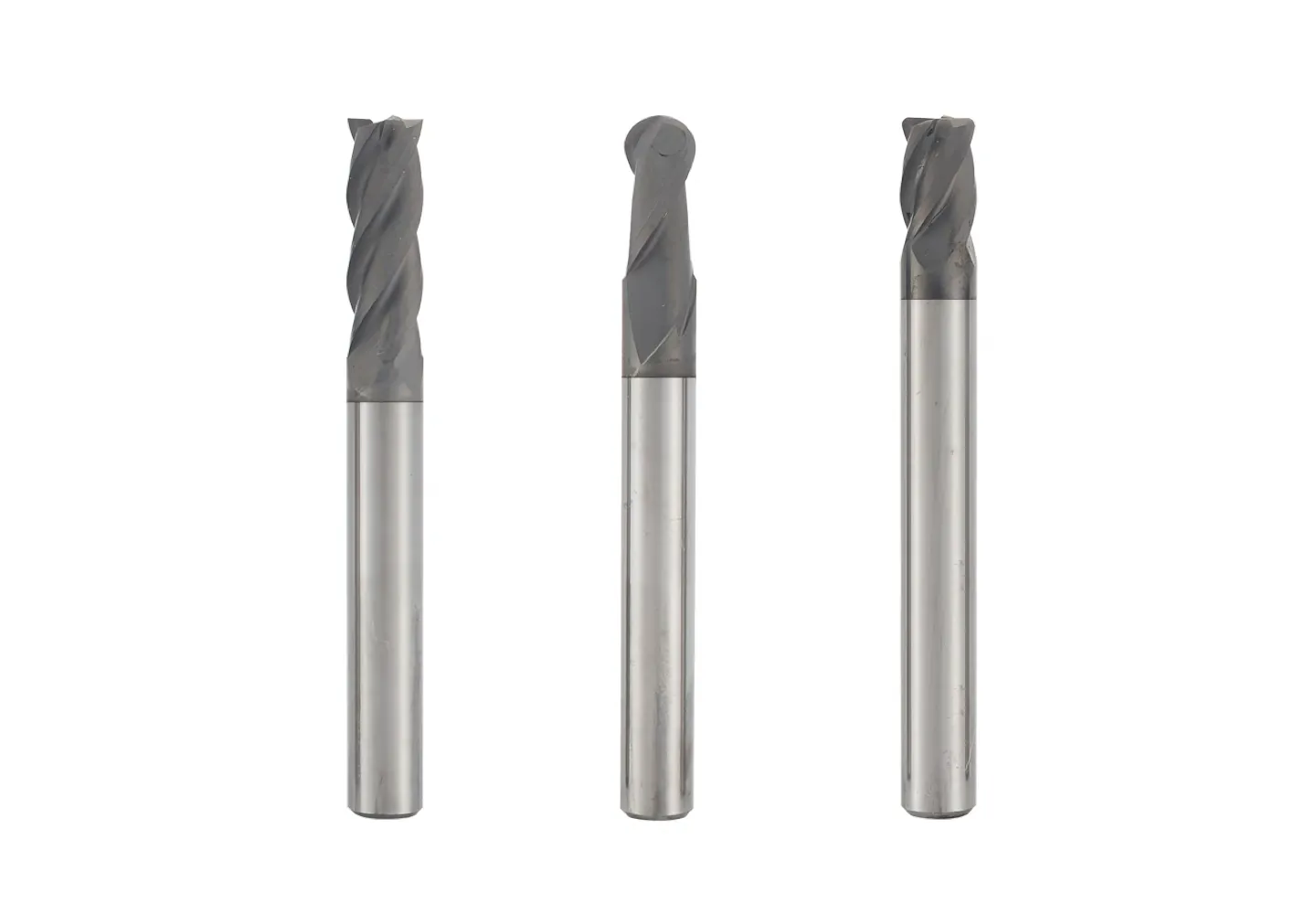
Compare China diamond-coated graphite end mill suppliers. Check coating type, finished dimensions, neck clearance and electrode trial results before ordering.
Buyers sourcing diamond-coated end mills for graphite need to compare the finished cutting edge, not just the word diamond. Electrode details, corner quality and dimensional drift determine whether a tool is useful in production. This China supplier shortlist focuses on businesses with a published graphite or diamond-coated end mill range and explains how to check a quotation for the geometry you actually need.
China manufacturers and suppliers to compare
| Manufacturer / supplier | Published product route | What to verify |
|---|---|---|
| Solid Carbide Direct / KY Tools | Diamond-coated graphite families with several tip and reach options | Check the finished diameter, radius, reach and requested inspection report. |
| DOHRE | MEX graphite end mill category | Request coating details and the exact square, radius or ball-nose series. |
| Leehoo / Changzhou Lihao Tools | NX diamond coating end mill category | Confirm the offered tool is intended for your graphite and electrode geometry. |
| TSHZ | CVD diamond-coated square, radius and ball-nose tools | Confirm coating process, dimensional inspection and application conditions. |
| ZHY | Published diamond-coated carbide graphite end mill range | Verify the quoted dimensions, coating specification and supply terms. |
Official supplier references
Specify the diamond tool construction
Ask whether the offer is a diamond-coated carbide tool or a tool with a polycrystalline diamond cutting element. These constructions are not interchangeable descriptions. Also avoid treating a diamond-like carbon coating as proof of a crystalline diamond coating. Request the supplier’s coating designation, process description and intended work material in writing so that the sample and repeat order can be compared.
Choose geometry from the electrode drawing
| Electrode feature | Selection priority | Acceptance check |
|---|---|---|
| Broad floors and shoulders | Square or corner-radius geometry matched to the drawing | Floor finish, corner size and edge chipping |
| Three-dimensional contours | Ball radius and usable reach | Measured profile and finished radius |
| Deep narrow ribs | Neck clearance and effective length | Collision clearance, deflection and rib dimensions |
| Small details | Edge condition and finished coated dimensions | Detail reproduction under the agreed inspection method |
A nominal diameter on an uncoated blank is not a substitute for the finished tool measurement. Ask how the supplier checks diameter and radius after coating, and which tolerances apply to the tool you will receive. For narrow ribs, verify the complete envelope of the neck and shank against the cavity rather than comparing cutting length alone.
Assess coating and tool life without relying on a multiplier
Claims such as several times longer life are only useful when the baseline, graphite grade, engagement, toolpath and stopping criterion are disclosed. Establish your own comparison using the same electrode geometry and material batch. Record when dimensions or edge quality first exceed the acceptance limit, not just when a tool visibly breaks.
Take magnified photographs before and after the trial. Distinguish gradual abrasive wear, localized edge chipping and areas of apparent coating loss, and ask the supplier to review the images. These observations help frame the next trial; they do not by themselves prove the root cause. Keep dust extraction and machine cleaning consistent across the test.
What a complete graphite-tool quotation should contain
- Graphite grade, grain information if available, and electrode drawing.
- Tool diameter, ball or corner radius, flute length, effective reach and neck diameter.
- Diamond coating specification and finished dimensional limits.
- Inspection method for diameter, radius and edge condition.
- Sample quantity, repeat-order demand, marking and packing requirements.
When to contact KY Tools
The Solid Carbide Direct graphite range provides separate square, ball-nose, corner-radius and long-reach options. Use the relevant family as the starting point and send the electrode feature that controls acceptance. For a custom reach or radius, ask for a drawing review before assuming a catalog cutter can be extended without changing machining behavior.
Products and related buying guides
Related supplier comparisons
Compare suppliers and prepare an application-specific enquiry.
Compare suppliers and prepare an application-specific enquiry.
Compare suppliers and prepare an application-specific enquiry.
Compare suppliers and prepare an application-specific enquiry.
Compare suppliers and prepare an application-specific enquiry.
Tags