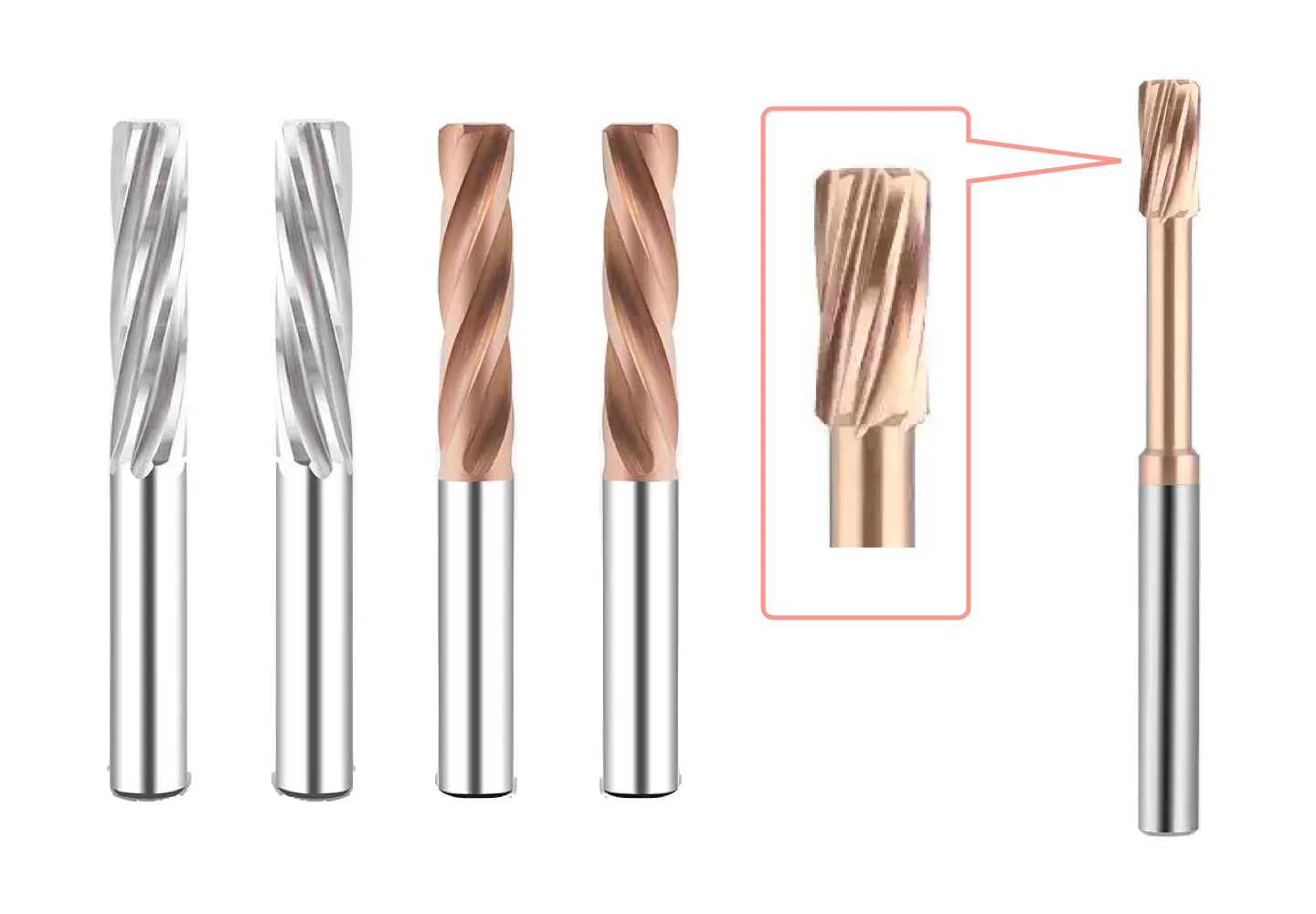
Compare China reamer suppliers for precision holes. Specify hole limits, pre-hole condition, blind or through geometry, inspection and carbide versus PCD tooling.
A reamer supplier should help you define the finished hole, not simply quote the nominal tool diameter. Hole size, roundness, finish and the condition of the preceding operation determine what must be validated. This guide compares China suppliers with published reaming routes and explains the questions that matter when buying solid carbide or special reamers. Where a catalog route is PCD, that distinction is stated rather than treating every reamer as the same construction.
China manufacturers and suppliers to compare
| Manufacturer / supplier | Published product route | What to verify |
|---|---|---|
| Solid Carbide Direct / KY Tools | Published solid carbide and custom reamer examples | Specify hole limits, material and measurement plan for the quotation. |
| AHNO | Public reaming and formed valve-hole tool examples | Confirm the exact tool material, geometry and supported application. |
| Yongpu Precision | Published reaming routes including PCD reamers | Separate PCD options from any requested solid carbide design. |
| GESAC | Specialized reaming tools and PCD composite boring-reaming offerings | Check construction and work-material suitability before comparing prices. |
| DOHRE | Reamer category within its holemaking range | Request a product drawing and the inspection specification. |
Official supplier references
Public reamer and valve-hole machining examples.
Includes PCD reamer families in the product navigation.
Specialized reaming category; confirm the offered construction.
Reamers appear as a distinct holemaking category.
Put the hole specification ahead of the cutter specification
Send the nominal hole diameter and its actual upper and lower limits. If the drawing uses a fit designation such as H7, include the nominal size and applicable drawing standard so the requirement is unambiguous. Also state the surface-finish parameter and limit, any roundness or cylindricity requirement, and how the part will be measured. A fit code alone does not describe the complete acceptance condition.
Define what the reamer receives from the previous operation
| Input | What to record | Why the supplier needs it |
|---|---|---|
| Pre-hole | Diameter range, straightness and preceding tool | To evaluate the available stock and incoming variation |
| Hole form | Blind or through; interruptions and cross holes | To review flute direction, chip path and entry geometry |
| Material | Grade, hardness and heat-treatment state | To review cutting material and edge design |
| Setup | Holder, runout, stick-out and coolant supply | To assess process conditions for the trial |
| Acceptance | Size limits, finish and measurement method | To define a common stopping and rejection criterion |
Do not assume that reaming will correct every error inherited from drilling. If hole position or straightness is already outside the drawing requirement, ask whether the upstream process needs correction. Likewise, avoid prescribing one universal reaming allowance across diameters and materials. Give the supplier the measured pre-hole range and request a recommendation for the actual tool and job.
Keep solid carbide, carbide-tipped and PCD offers separate
These tool constructions can have different application and maintenance routes. When requesting solid carbide, state that explicitly. If a supplier proposes PCD or another construction, ask for the work-material rationale, dimensional adjustment or repair options, and the commercial implications. Compare the proposed process against the hole requirement rather than treating the alternative as a direct unit-price equivalent.
A practical acceptance plan for the sample batch
Measure incoming holes and finished holes with the agreed equipment under consistent inspection conditions. Record the sequence of parts, rather than keeping only the first accepted result. Watch for size drift, finish changes and entry or exit defects. Set the inspection interval before running the batch so that a tool-life claim can be linked to accepted holes.
If a sample produces oversize or rough holes, provide the supplier with the pre-hole measurements, tool runout, coolant details and edge photographs. Changing tool diameter without checking the setup can obscure the cause. Agree on one documented adjustment for the next trial and preserve the previous result for comparison.
When to request a KY Tools quotation
KY Tools publishes custom solid carbide reamer examples that can serve as a starting point for a drawing review. For a necked, stepped or special-flute tool, submit both the finished-hole drawing and any existing tool drawing. Ask which dimensions will be checked on the tool and which characteristics must be demonstrated in the machining trial.
Products and related buying guides
Related supplier comparisons
Compare suppliers and prepare an application-specific enquiry.
Compare suppliers and prepare an application-specific enquiry.
Compare suppliers and prepare an application-specific enquiry.
Compare suppliers and prepare an application-specific enquiry.
Compare suppliers and prepare an application-specific enquiry.
Tags